
The "Quick Fix" That Wasn't
Imagine you buy a house. You want to add a bathroom. A contractor says, "I can do it for $5,000, but I have to run the pipes on the outside of the wall and duct tape them." You think, "Great! I save money!"
Two years later, you want to sell the house. The inspector laughs and says the house is unsellable until you rip out all the pipes and redo them properly for $50,000.
You saved $5,000 upfront to lose $50,000 later.
This happens in software every single day. It has a name: Technical Debt.
Symptoms of Bad Architecture
You might not look at the code, but you can feel bad architecture in your business results:
- The "House of Cards" Effect: You ask for a small change (like changing a logo), and suddenly the checkout page breaks.
- Sluggish Velocity: Your competitors are releasing new features every week. Your team takes 3 months to release a simple update.
- Developer Turnstile: Good developers hate working on messy code. If you have high turnover, your architecture is likely the problem.
The Digitorb Way: Architecture First
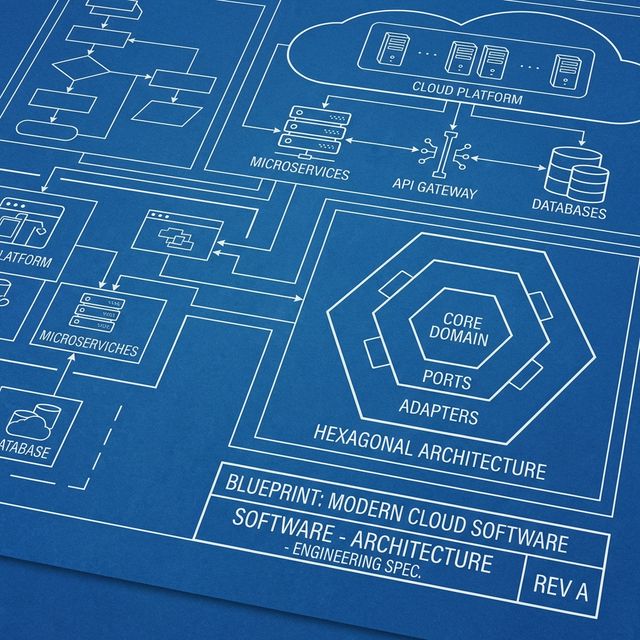
We believe in "Measure twice, cut once." Before we write a line of code, we design the Blueprint.
We use modern architectural patterns like Microservices. Instead of building one giant, tangled ball of code (a "Monolith"), we build small, independent blocks - like LEGOs.
Why does this matter to you?
- Risk Isolation: If the "Reviews" block breaks, the "Payments" block keeps working. Your business never fully stops.
- Future Proofing: If you decide to switch payment providers in 2 years, we just swap out that one LEGO block. We don't have to demolish the whole house.
Client Success: The Fintech Startup
A startup came to us with an app built by a "low cost" overseas agency. It crashed whenever more than 100 users logged in. They were bleeding money.
The Solution: We didn't patch it. We strangled it. We gradually replaced the core engines with Cloud-Native microservices.
The Result: They just raised their Series B funding. The audit team specifically praised their robust, scalable architecture as a key reason for the investment.
Software is an Asset, Not an Expense
If you treat software like an expense (something to minimize), you get a liability. If you treat it like an asset (something to invest in), you get a competitive moat.
Good architecture is invisible. It’s exactly like the foundation of a skyscraper. No one takes photos of the foundation. But without it, there is no view from the top.
Is Your App Built on Sand?
We offer a comprehensive Code Audit. We'll examine your foundation and give you a plain-English report on your risks.